• Our focus
Multispecific yet truly natural antibodies

Taking next generation, multispecific antibody technologies into Alzheimer’s Disease and Antimicrobial Resistance

Taking next generation, multispecific antibody technologies into Alzheimer’s Disease and Antimicrobial Resistance

Who we are
Who we are

Long term pharma and biotech professionals with a track record of leading projects from research into the market

Our antibody development roots go deep

Our focus
Our focus

Multispecific yet natural

Alzheimer’s Disease and Antimicrobial Resistance

CD47 Dual targeting
Our pipeline

Fully human bi- and multi-specific antibodies for the treatment of Alzheimer’s Disease and Antimicrobial Resistant infections

Safe and selective blockade of CD47 on tumors

Looking into the future

Beyond bispecific antibodies

Beyond bispecific antibodies

previous arrow
next arrow

Our focus

Alzheimer’s Disease, Neuroinflammation and Antimicrobial Resistance

As diverse as Alzheimer's Disease (AD), Neuroinflammation and Antimicrobial Resistance (AMR) are, they carry in common a high burden on our population already now with a most gloomy outlook. Prominent failures in AD trials and a dried-out antibiotics pipeline are the drivers for these worrisome developments. At discoveric bio we take the challenge to developing innovative solutions in these areas applying disruptive bi- and multi-specific antibody technologies with the aim to deliver safe and effective therapies to patients.
Back

Alzheimer's Disease

Alzheimer’s Disease is the most common cause of dementia. In its 2022 report, Alzheimer’s Disease international (ADI) estimated that there were over 55 million people living with dementia globally, a figure set to increase to 139 million by 2050. The World Health Organization (WHO) estimated the global societal cost of dementia in 2019 to be US$1.3 trillion (1).

ADI estimated that 75% of people with dementia were not diagnosed globally.

Recent progress in the biomarker field, especially blood-based biomarker may help to better diagnose the disease in the future.

There is currently no cure for Alzheimer’s Disease, and five symptomatic treatments are approved by the U.S. Food and Drug Administration (FDA).

The Amyloid-beta antibody Aduhelm has been approved by the FDA in June 2021, however it is not widely used and reimbursed. Other Amyloid-beta antibodies are in late clinical development and may be approved in 2023 (2).

Multiple other target drugs aiming at slowing down the progression of the disease are in clinical development (2).

At discoveric bio alpha we develop novel antibody-based therapeutics to slow down the progression of this complex disease.

Source:

(1) World Alzheimer Report 2022 Life after diagnosis: Navigating treatment, care and support
(2) Alzheimer's disease drug development pipeline: 2022

Back

Antimicrobial Resistance

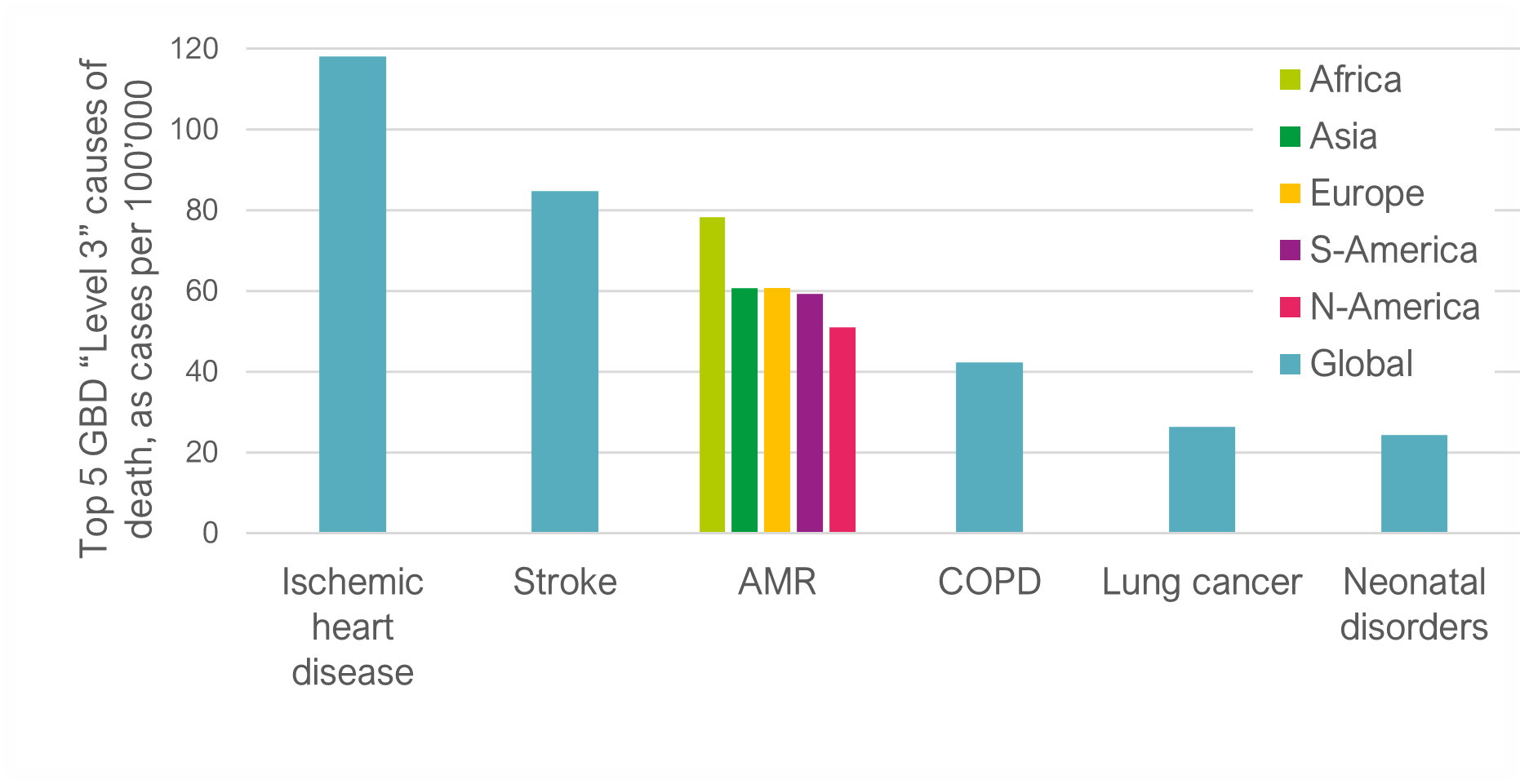
Five million deaths have been associated with bacterial AMR in 2019 as estimated by the Antimicrobial Resistance Collaborators (1). Compared with all underlying causes of death in the Global Burden of Diseases 2019 AMR would have ranked third, corroborating the persisting global threat from AMR (2). Twice this number of deaths is projected for 2050, at a cost of US$ 100 trillion to the global economy through loss of productivity (3).

Tab1

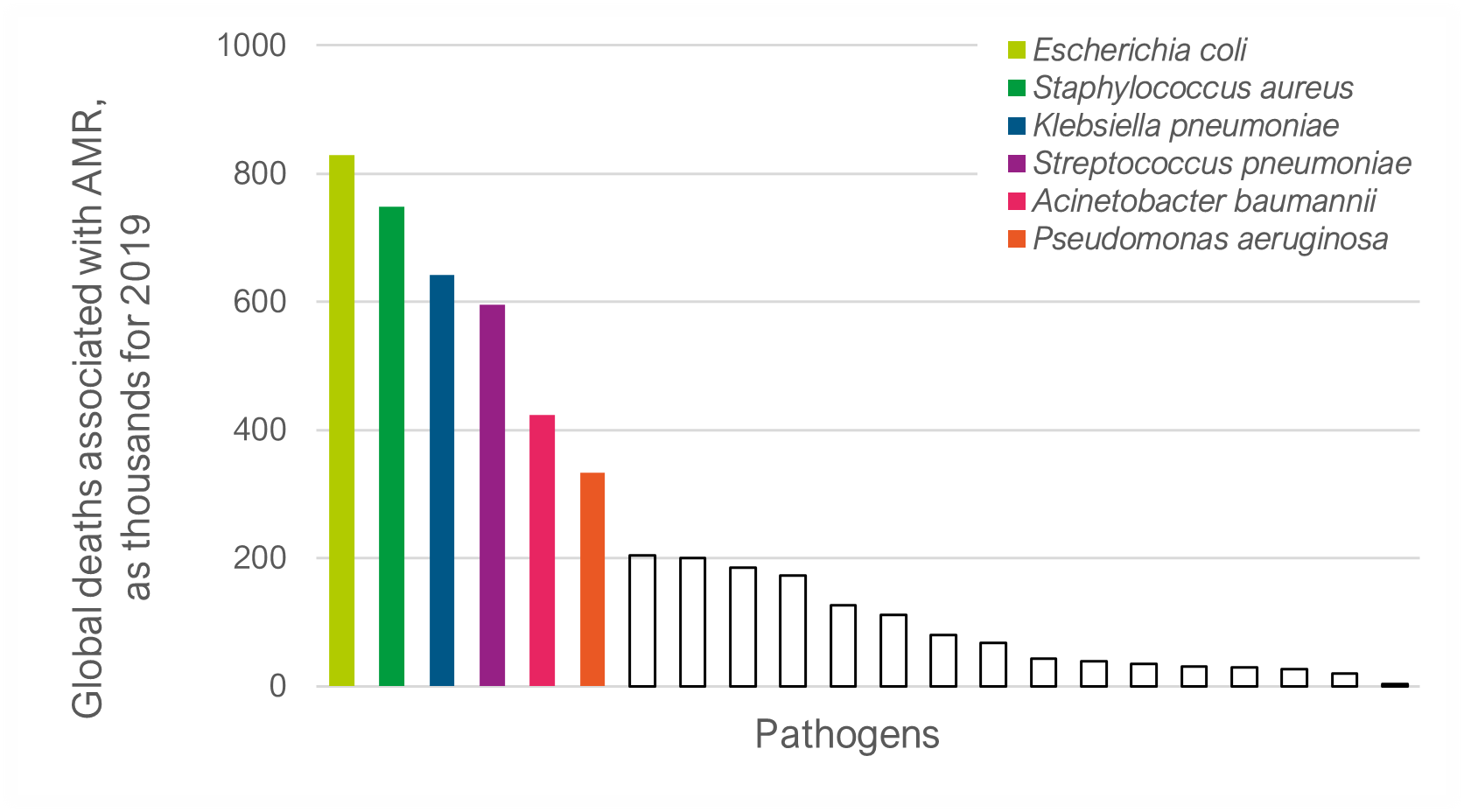
In the study led by the Antimicrobial Resistance Collaborators, six pathogens were found responsible for more than 70% of deaths, including E coli, Staphylococcus aureus, K pneumoniae, S pneumoniae, A baumannii, and P aeruginosa. The WHO has also issued its list of priority pathogens to guide research and development of new antibiotics, where Gram-negative bacteria, including carbapenem- and 3GC-resistant Enterobacterales, P aeruginosa, and A baumannii have been categorized as critical priority (4,5).

Tab2

At discoveric bio beta we develop novel antibody-based therapies addressing AMR in the treatment of serious lung and blood stream infections from Gram-negative bacteria.

Source:

(1) Murray et al. Lancet. 2022 Feb 12;399.
(2) Murray et al. Lancet. 2020 Oct 17;396.
(3) O’Neill. The Review on Antimicrobial Resistance. 2016.
(4) Tacconelli et al. Lancet Infect Dis. 2018 Mar;18.
(5) WHO. Prioritization of pathogens to guide discovery, research and development of new antibiotics for drug-resistant bacterial infections, including tuberculosis. 2017.

Back

Neuroinflammation

Neuroinflammation is a hallmark of Alzheimer’s and Parkinson’s Disease in neurohistological and neuroimaging studies. Recently, multiple disease genes and risk factors have been identified as modulators of immune function in AD and PD (1, 2).

At discoveric bio gamma we develop novel antibody-based therapeutics to modulate neuroinflammation for neurodegenerative diseases.

Sources:

(1) Gámez Tansey et al., Nat. Rev. Immunol. 2022 Inflammation and immune dysfunction in Parkinson disease
(2) Podleśny-Drabiniok et al. Trends Neurosci. 2020. Microglial Phagocytosis: A Disease-Associated Process Emerging from Alzheimer’s Disease Genetics

Back

Background KL-platform

Why fully human κλ bodies

Whenever antibodies are engineered to differ from their natural counterpart either by using non-human (e.g. murine) sequences or a different format compared to natural IgG, the risk of neutralizing anti-drug antibodies (ADA) arises. These are produced by the body as part of a physiological response against any “foreign” proteins. Exactly this mechanism has prevented the successful use of therapeutic antibodies for more than a decade. Taking advantage of the unique features of human antibody light chains, our partner LightChain Bioscience – NovImmune SA has developed a highly competitive and advantageous antibody platform.

Their κλ bodies consist of two identical heavy chains and two different light chains: one kappa (κ) and one lambda (λ). The resulting bispecific antibodies fully retain the sequence and architecture of human antibodies. By being truly human, the risk of inducing immunogenicity and loss of exposure is minimized. Antibodies in this format are ideally suited for therapeutic application in both benign and malignant diseases. In addition, the κλ format facilitates production/purification.

background kl platform

Back